


Integrating your grocery operations into a new platform without impacting customers
Integration complexity is the single biggest barrier deterring companies from embracing automation (Interact Analysis, 2026). For most businesses, this means balancing two major anxieties: how to migrate critical information without data loss, and how to avoid customer-facing operational downtime.
In grocery, these challenges can compound. Historically, grocers looking to shift their operations to a new platform have worried about the risk to both customer loyalty and economics. With the Ocado Smart Platform - the automated end-to-end grocery solution - we are solving this challenge.
As we look ahead to bringing Asda onto the Ocado Smart Platform, this article explores how we successfully integrated a global grocery retailer with minimal disruption to customers.
What to consider when migrating
Migration requirements vary greatly by industry. What works well in one logistics sector, for example, does not always work for grocery, as the customer needs and operational models may be vastly different. Here are some of the key considerations grocery retailers need to keep top of mind before migrating:
- The live nature of grocery - The migration window is tight in grocery. While standard ecommerce orders are ‘locked in’ for several hours after they are placed, grocery orders are dynamic. Shoppers will constantly modify baskets up until even an hour before delivery. This fluid environment leaves a very narrow window for when platform migrations can take place.
- The complexity - Managing a grocery migration can be expensive and complex. Unlike other ecommerce channels where customers buy 1-2 items infrequently, grocery shoppers buy often and in large quantities. An average grocery basket sits at around 50 items. Retailers are also managing large inventories of up to 50,000 products, distributed across multiple locations and distinct temperature zones (fresh, frozen and ambient). Much of this is being navigated across multiple legacy systems that aren’t in communication with each other.
- The order of your migration - It’s not just the volume of data that’s a challenge. The depth of this data is also a consideration - catalogues, promotions, slot configurations, loyalty data - each category is a migration in its own right. These have to be shifted in the right order at the right time, while maintaining the legacy platform to ensure no disruption to customers who haven’t yet been moved.
Why is it simpler on OSP?
The Ocado Smart Platform is an automated end-to-end grocery management solution that encompasses ecommerce, fulfilment, supply chain, and last mile.
It evolved naturally to serve Ocado Retail, supporting one of the fastest-growing retailers in the UK grocery market, and later scaled to support grocery retailers all over the world.
OSP addresses the exact pain points described above, associated with typical grocery migrations:
- Live data - OSP brings together every major element of the grocery journey into one single platform. This interconnectivity is what keeps grocers on the front foot. For instance, if a customer decides to add more apples to their basket after checking out, the system would instantly register this change, verify warehouse stock for that specific delivery window, and only then display them as ‘in stock’ on the webshop. During an integration, this unified approach ensures live customer updates are always reflected - boosting data accuracy in the process.
- Modular by design - OSP reduces migration complexity through its modular design. It is composed of distinct capabilities meaning retailers can either adopt the platform in its entirety or choose particular combinations to shift. This makes the migration much simpler, as the scope of the work and the customer impact window are all aligned to what is actually moving.
- Experienced teams - Through multiple successful migrations with our existing partners, we have developed a future-proof approach. This ensures legacy platforms and OSP run together in parallel during these projects, keeping customer disruption at a minimum.
Grocery retailers migrating to OSP
Together, we partnered on a project to migrate Ocado Retail from their legacy platform, Ocean, directly onto OSP. This involved transferring close to 500,000 live orders (orders that were already placed and ready to be fulfilled) from one platform to another. The results were seamless. After 2,000+ test migrations and 10 million+ test accounts, 1.5 million active customers were successfully transitioned.
The technical insights gained from this experience have helped to fine-tune our approach to migrations, ensuring future projects are even speedier and more efficient. Some of these insights include:
- Creating effective feedback loops to ensure we improve after each migration event.
- Incorporating contingency planning into our delivery approach to enable effective responses to unforeseen external disruptions. This capability was particularly important during one migration event where a third-party service outage impacted operations.
- Understanding that the data we’re working on is dynamic, not static. Both Ocado Retail and OSP continued to develop over the time of the migration. By the end of the project, we had launched more partner sites and new platform features than we’d first imagined.
Grocery retailers on OSP benefit from both market-leading technology and Ocado’s deep expertise.
Australian grocer Coles reinforced the strength of the platform at the opening of their Victoria fulfilment centre last year:
"We sought the best global technology in the world to reimagine the Coles Online experience here in Australia.”
Highlighting Ocado’s human-centric approach to partnership, the CEO of Spanish grocery retailer Alcampo recently noted:
“We work as one team with Ocado.”
What’s next for OSP?
With OSP, we’ve taken a process that used to require years of planning and operational sacrifices, and shaped it into something swift, predictable and efficient. Asda is set to become the newest partner to take advantage of this. Next year, they will transform their operations and customer service through a newly migrated system that runs entirely on OSP.
As we look to the future, we’re focusing on making the platform even more flexible with new integration capabilities already on the horizon. This will give partners the ability to choose between in-house delivery and third-party providers to offer greater levels of convenience to customers.
Related content

Online grocery through the Ocado Smart Platform
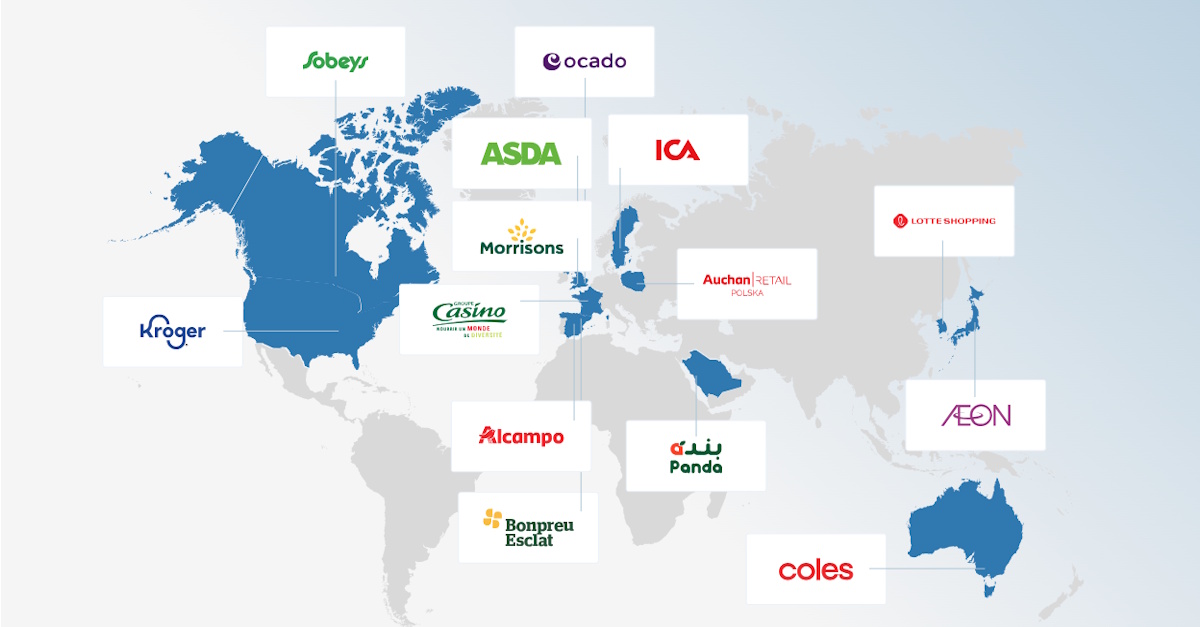
Ocado Group's Global Partners

Explore our newsroom